

EDITORIAL: Look both ways before crossing on Tipperary's roads

Whether you are walking out on the road or designing them, you need to look both ways before you cross.
That was a lesson rediscovered at this week’s Tipperary County Council plenary meeting. The council presented a new policy for the design of vertical deflections.
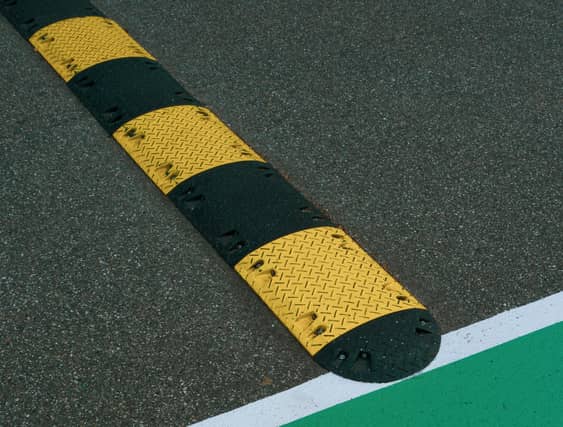
That really is just a fancy way of saying raised areas of road designed to slow drivers down. An example being ramps.
In fact, the council policy named five diversions, cushions, bumps, humps, raised crossings and raised platforms.
The idea was to prioritise raised platforms and crossings over the three kinds of ramps in new road designs.
The council officials said this will mean less damage to cars while also making roads safer for pedestrians. As the policy was to be adopted, some councillors had concerns about moving away from ramps.
They felt that ramps have been proven to slow motorists down and to remove them, particularly from residential areas, would be dangerous.
Other councillors felt the policy should be given a chance and reviewed later if it proved to be ineffective. It is better, they argued, to have an imperfect policy than none at all. The roads SPC did after all spend months hashing this out.
According to the RSA, the number of pedestrians killed on Irish roads has risen two years in a row. In 2022, it doubled.
Although not particularly dangerous for pedestrians, Tipperary had the highest number of road fatalities in 2023. So, an ineffective plan is, arguably, a dangerous one.
Councillors often talk about preventing accidents waiting to happen on Tipp’s roads.
Would this policy have done that? In the end, the prohibition on ramps was shelved.
Councillors agreed at the suggestion of the roads director, Marcus O’Connor, to remove the lines related to moving away from ramps and have the SPC look at it more closely. The plan was adopted with the amendment. It really is a good news story.
And to be fair, it’s not all on councillors.
Speed is a behaviour problem, not one of design.
You have to wonder though, if the ramps are so effective, why try to reinvent the wheel?
And if ramps don’t slow drivers down, what policy possibly could?