

Cows 'no taller than a great Dane' win for Tipperary farmer
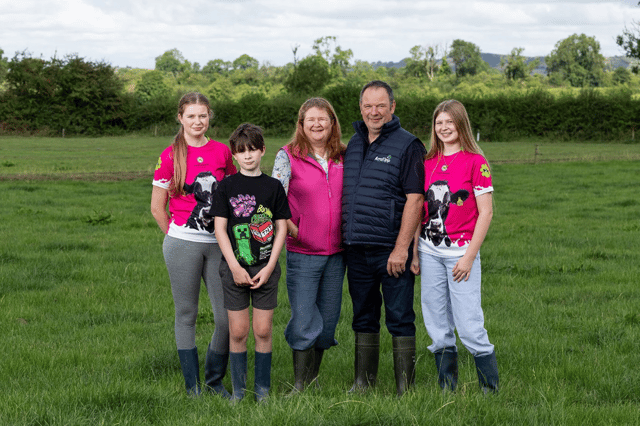

The Breen Family won at the annual NDC & Kerrygold Quality Milk Awards, coming home with the Lowest Carbon Footprint Award
Two Tipperary farms were among 12 finalists at this year’s NDC & Kerrygold Quality Milk Awards, the Campion family at Graigue and the Breen family, farming near Emly.
The two were among finalists celebrated for excellence in milk production and sustainable dairying at a special ceremony hosted at Lyrath Estate Hotel, Co. Kilkenny.
Simeon Breen and his farming family were successful on the night, returning home to Tipperary with the Lowest Carbon Footprint Award.
The overall winners were the Troy family from Newtownshandrum in Cork where they milk 425 cows.
Minister for Agriculture, Food and the Marine, Martin Heydon TD gave his “warmest congratulations to all of this year’s finalists and category winners. Ireland’s reputation for producing high quality, sustainable dairy is built every day on the dedication, expertise, commitment and hard work of family farms across the country.
“The commitment demonstrated by this year’s finalists to the highest standards in milk quality, animal health and welfare, environmental sustainability and excellent farm management represents the very best of Irish dairy farming.”
CAMPION FAMILY
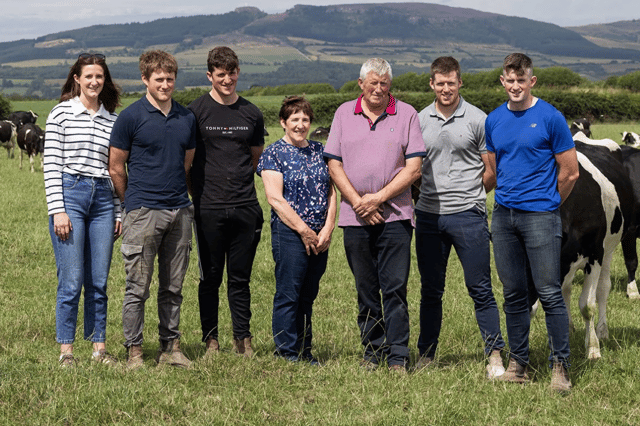
Representing Centenary Co-op, the Campion family are new entrants to dairying.
“Until 2021 Paddy Campion ran a well-regarded beef enterprise here on the edge of the Devil’s Bit country; today he and his son Lorcan milk 160 cows on a simple, spring-calving, grass-based system that would be the envy of farmers three generations into the job.
“To go from a standing start to representing Centenary Thurles Co-op at the NDC and Kerrygold Quality Milk Awards in the space of five years is a remarkable achievement and one the whole family has had a hand in” said organisers.
“You know something before you are halfway up the lane at Graigue. The yard is swept, the roadways run true to every corner of the grazing block, and the cows lift unhurried heads as you pass, the settled calm of a herd that is well handled and well housed. What you would never guess is that, four short years ago, there was not a dairy cow on the place.”
It is very much a family enterprise. Paddy and Lorcan farm full time; Ann, Paddy’s wife, now retired, is back in the thick of it every spring for calving and calf care. Sons Michael, John and Podge lend a shoulder when they are needed. Michael, a Teagasc advisor, brings a professional eye to the home place , while daughter Miriam completes a household as well known on the playing field as in the parlour.
“The four Campion brothers all hurl for the Drom & Inch seniors; John and Podge have worn the Tipperary jersey at senior inter-county level, and Miriam is a Tipperary senior camogie player. The family are cousins, too, of the celebrated McGrath sporting clan from neighbouring Loughmore-Castleiney, so when the two parishes meet, it is very much cousin against cousin.
“If sport is in the blood, so too is the discipline it demands, and it shows in the milk.”
The Campions were praised for the milk quality, and bacterial count sits in single figures to the low teens, “the mark of a spotless routine in a parlour barely four years old.”
The 20-unit parlour, built in 2021, was laid out with real thought: air gates, automatic cluster removers, an automatic wash and a drafting gate that together make light work of 160 cows and take the drudgery out of the day. In 2025 the herd delivered almost 82,000 kg of milk solids, an average of 525 kg per cow , figures that speak of grass well grown and cows well fed.
“For all the technology, the goal is refreshingly human: a 40-hour working week, a 6.30 start and a 4.30 finish, and time left over for the hurling and the camogie that mean so much to this family. In just four years the Campions have built what many farmers spend a lifetime chasing, a high-quality, sustainable and genuinely happy family farm.
“Centenary was founded in 1898 and has survived by changing with agriculture while remaining farmer-owned. The Campions are doing something similar on a smaller canvas: respecting a strong farming inheritance while being willing to rebuild the enterprise for a new generation. Centenary describes them as modest by nature. The nomination allows the co-op to say publicly what the family would be slow to say about themselves.
BREEN FARM
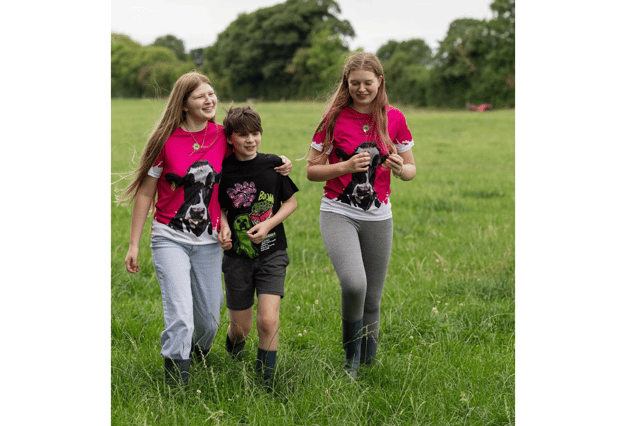
“Some of the cows grazing the milking platform at Gurteen are as Simon Breen will tell you with a straight face, no taller than a great dane. They are small, compact and maybe unfashionable to some eyes.
“However, they are among the most productive animals in the country at the one thing that decides a milk cheque: solids. That contradiction is the whole story of this farm, and it is no accident. It was bred, measured and managed into being.” said the Quality Milk Awards organisers.
The Breen family, Simon and his wife Carol, with their children Julia, Sarah and Peter, farming alongside Simon's parents, Peter and Sheila, milk 254 cows near Emly in the west of Tipperary. This spring they were named the very first Milk Supplier of the Year for the newly merged Arrabawn Tipperary Co-op, an honour the family describe as representing not just their own yard but their parish. They were nominated for the awards by ArraTipp Co-op, and came home with the Lowest Carbon Footprint accolade.
Simon is the second generation here: his parents bought the original 56 hectares in 1979, and three generations have since grown it into a 127-hectare business that comfortably supports two families.
Twelve years of crossbreeding built the herd he wanted.
“The last pure Friesian, a remarkable 13th-lactation cow, left only this year; Friesians were crossed first with Jerseys, then with New Zealand Kiwi-cross genetics, chasing fertility, high solids and a low carbon footprint. Today every dairy replacement is bred from sexed semen, while seven in ten calves are beef-sired, a easy calving Belgian Blue over low-beef-merit cows to produce a calf buyers will queue for.
"With such low beef-merit cows, we have to use a substantial bull to get an easily saleable calf," Simon explains, and careful body-condition management keeps calving trouble-free.
The enterprise has been chlorine-free since 2017, “years ahead of requirements”.
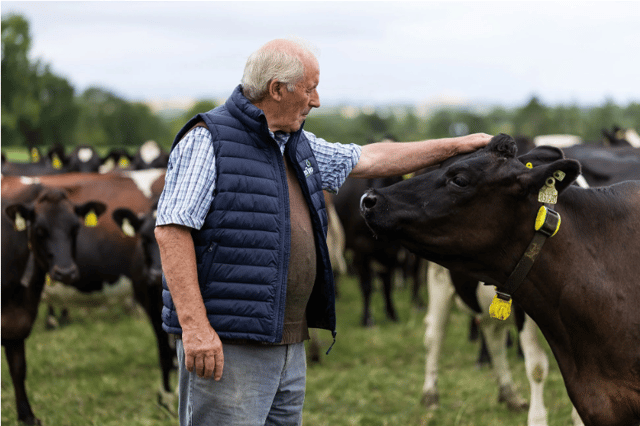
The herd is out for 310 days a year, from early February to mid-December, and the farm meets the Grass-Fed standard. Simon walks the farm and measures grass 50 times a year on PastureBase, "you can't manage something you don't measure", and has pushed clover to 27% of the grazing platform, with 77% of the silage ground now with red clover taking zero chemical nitrogen.
Three-quarters of the chemical fertiliser used is protected urea; no straight urea or CAN goes out at all. He has strong views, cheerfully held: "Every farm should have a grasshopper and every parish a roller, but only roll reseeded ground."
Simon uses cow collars, and technology like HerdApp, GPS guides, and PastureBase for grass data.
“The environmental work runs well past the paddock gate. The farm's carbon footprint sits at 0.76. A 1.25-hectare reed bed polishes grey water from the yard; two hectares of new native woodland , alder, birch, rowan, oak and whitethorn, and a fresh kilometre of whitethorn hedge have gone in, with a solar application pending.
“Simon is matter-of-fact about the trees: he has no intention of ever harvesting them. They will, as he puts it, still be standing there when he is long gone.
Beyond the farm gete, Simon never misses his daughters' GAA matches and he chairs the parish text-alert group, sings in the Emly church choir, brings farm-safety talks to the local pre-school, mentors a UCD student at Moorepark each year, and chairs the Clover EIP discussion group, knowledge given as freely as it is taken.
No stone was left unturned to try and win this competition outright and in an attempt to influence proceedings, Simon’s mother Sheila shared the family’s secret brown-bread recipe with judge Karina Pierce.
Simon Breen breeds a cow that looks like nothing special and performs like everything. That, in the end, is the measure of the man behind her. It is little wonder Arrabawn Tipperary chose this Emly family to carry its colours in its first year.