Search


21 Apr 2026
Search
21 Apr 2026

Please allow ads as they help fund our trusted local news content.
Kindly add us to your ad blocker whitelist.
If you want further access to Ireland's best local journalism, consider contributing and/or subscribing to our free daily Newsletter .
Support our mission and join our community now.
To continue reading this article, you can subscribe for as little as €0.50 per week which will also give you access to all of our premium content and archived articles!
Alternatively, you can pay €0.50 per article, capped at €1 per day.
Thank you for supporting Ireland's best local journalism!

Inflation could reach 6.7% in less than a year, according to a “severe” scenario forecast by the Department of Finance.
The forecast is the worst scenario included in a range of projections published in the Annual Progress Report on Tuesday, which examined potential impacts of the war in the Middle East.
The report also projected an Exchequer deficit of 1.2 billion euros for this year, and 3.4 billion euros in 2027.
The “severe” scenario is modelled on the event of “pronounced and prolonged disruption to energy supply” with oil at 130 dollars a barrel in 2026, and averaging 125 dollars a barrel in 2027.
The Department of Finance assessed three scenarios in its spring forecasts.
The reference scenario was based on energy prices prevailing at mid-March levels and involved headline inflation averaging 3.3% this year, with the Modified Domestic Demand (MDD) growth measure expanding by just over 2%.
MDD was expected to be up to between 2.5 to 3% if the Iran conflict had not arisen.
A more adverse scenario involved inflation averaging 3.7%, and a severe scenario had average inflation of 4.6% – peaking at 6.7% in the first quarter of 2027.
The full-year averages reflect “relatively modest inflation” in the first quarter but a “sharp acceleration in the annual rate” by year-end.
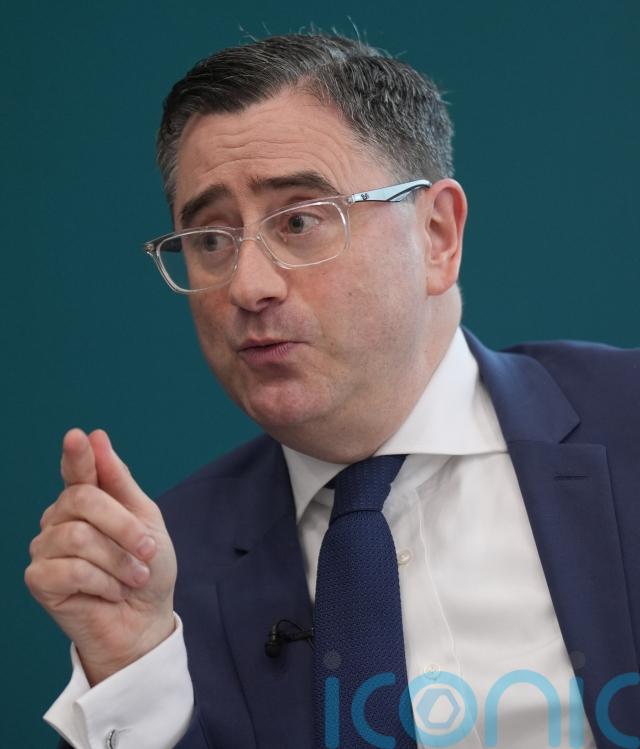
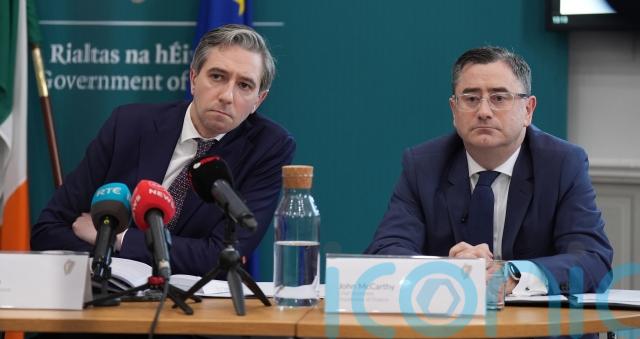
The department’s chief economist John McCarthy said the war remains a “major source of uncertainty” in the projections.
Outside of the Exchequer deficit, the department is projecting a general government surplus of 9.2 billion euros this year, and nine billion euros for 2027.
The 2026 projection is up from 5.1 billion euros and was attributed to corporation tax increases as well as revenue in the Social Insurance Fund and local authorities.
Asked how likely he felt a recession was, Mr McCarthy said: “Our assessment right now as to which scenario we see as most likely – on the basis of energy futures at the moment, I do think we’re between the reference scenario and the adverse scenario.
“I’m not outlining a probability to that.
“On the idea of a recession. Even in the severe scenario, the economy is growing both this year and next – but at the end of next year, the level of economic activity would be two percentage points below what it would be under the reference scenario.
“Now, in the current environment, you can never say never, and we draw some of the risks as I put there, but under the three scenarios that we presented, we are not in recession territory.”
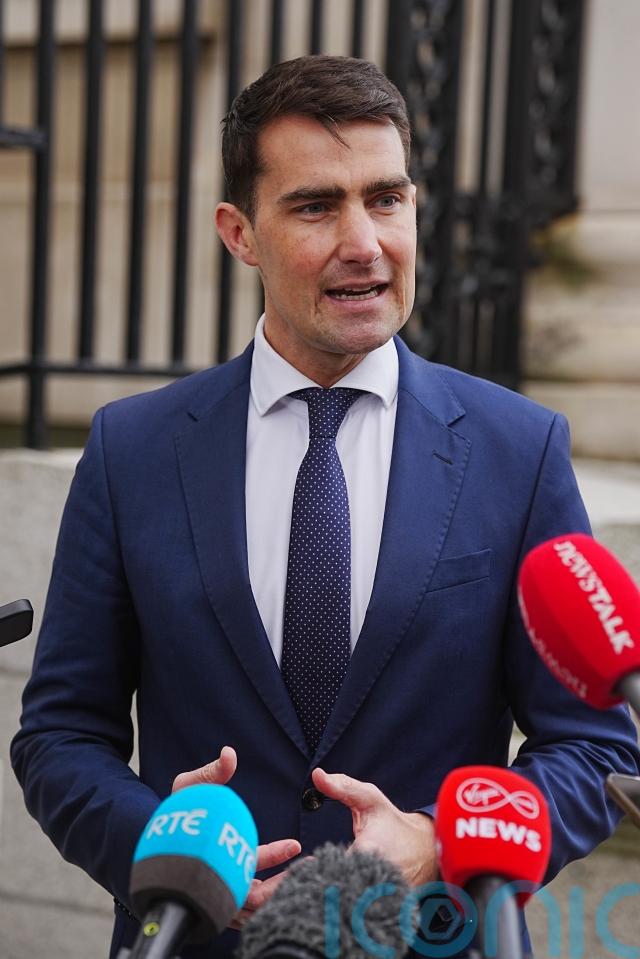
Meanwhile, Minister Jack Chambers also announced that the Government was increasing its expenditure ceiling by 700 million euros, including recent energy-crisis supports, as well as additional funding for the Department of Education, particularly in special education.
He added that an expenditure levy will be applied to departments from 2027 requiring them to implement reforms and efficiencies in the order of 446 million euros.
He said this would moderate the growth rate in expenditure to make room for additional investment in education.
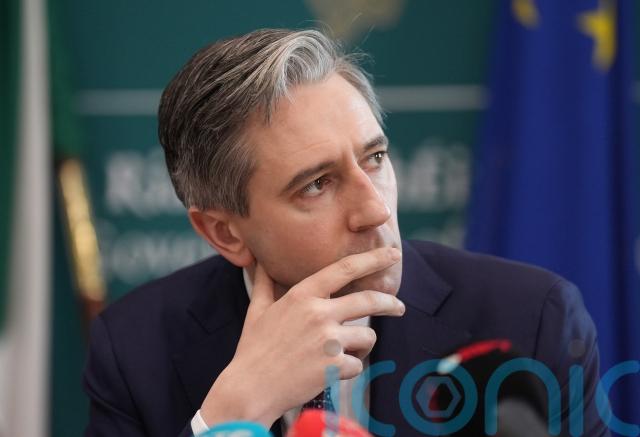
Earlier, Tanaiste and Finance Minister Simon Harris warned there was a risk of stagflation in the Irish economy.
Mr Harris said the country’s growth forecast would have been upgraded if Iran had not been bombed.
“That does speak to the resilience of the Irish economy where growth is strong, there are more people in work than ever before,” he said, arriving at Government Buildings ahead of Cabinet on Tuesday morning.
“We’ve got to move beyond the lazy politics of suggesting that surplus is a dirty word or a derogatory term. Thank God we have a surplus in this country.”
Mr Harris said there was a risk that inflation would rise to a level where the benefit of economic growth was not felt.
He said: “There’s a lot of risks at the moment and I suppose we’re trying to forecast and we’re trying to plan while grappling with external factors largely outside the control of this country.”
Mr Harris said Ireland was facing into the next period from a position of “real relative strength” and “fiscal resilience”, demonstrated by economic growth and high employment.
The Finance Minister said Ireland and Europe was “somewhat at the mercy” of decisions “taken by other people far away”, as he advocated for more sustainable energy use.
He said: “As we plan for the future, as we plan for the Budget, as we plan as a country, we’ve got to move the conversation beyond just what we do in the here and now around the energy crisis, to how we move away from a reliance on fossil fuels.
“To break that link, we have to make sure that we don’t just talk about how we help people in the here and now, but we also talk about how we help people with their energy bills in a more sustainable fashion.
“How we help people get solar on the roof, how we help people replace windows and doors, make their own home warmer, make their own home cheaper to heat.
“How also, through the Critical Infrastructure Bill, we accelerate the delivery of renewables.”

Subscribe or register today to discover more from DonegalLive.ie
Buy the e-paper of the Donegal Democrat, Donegal People's Press, Donegal Post and Inish Times here for instant access to Donegal's premier news titles.
Keep up with the latest news from Donegal with our daily newsletter featuring the most important stories of the day delivered to your inbox every evening at 5pm.

This publication supports the work of the Press Council of Ireland and Office of the Press Ombudsman, and our staff operate within the Code of Practice of the Press Council. You can obtain a copy of the Code, or contact the Council, at www.presscouncil.ie, Lo-call 1800 208 080 or email: info@presscouncil.ie.