

Three Tipperary young people feature in new RTÉ documentary series ‘Able’

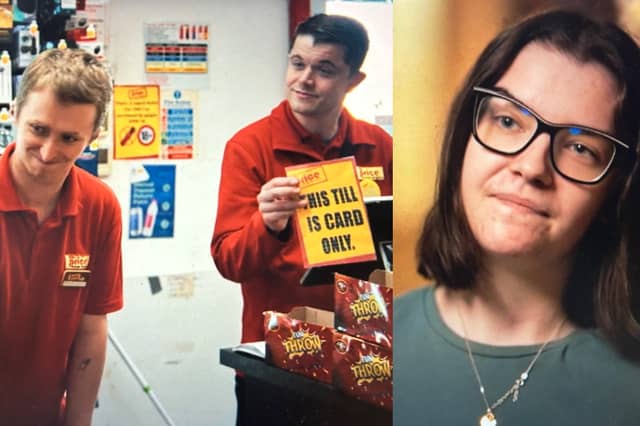

‘Able’ is a three-part series following six people with disabilities
Three young people from Tipperary are among those featuring in a new RTÉ Television documentary series which explores the challenges faced by people with disabilities in finding meaningful employment.
‘Able’, a new three-part series presented by Brendan O’Connor, follows six people with disabilities as they navigate the barriers to employment, while challenging perceptions and attitudes towards disability in the workplace.
Among those taking part is 21-year-old Melissa Ryan from Borrisoleigh, who lives with epilepsy, while Cian Cashin and Patrick Collins, who work at Mr Price in Nenagh, also feature in the series.
The first episode premiered on RTÉ this week, shining a light on the experiences of people who are eager to work, have skills to offer and want the opportunity to make their contribution in the workplace.
For Melissa, the programme provides an opportunity to speak openly about the difficulties of securing employment while living with a disability.
Diagnosed with epilepsy at the age of 10, Melissa has experienced the impact of the condition throughout her teenage years and into adulthood. Although she has previously worked in childcare, she explained that the unpredictable nature of her seizures presents significant challenges when it comes to employment.
Speaking during the programme, Melissa said: “My main thing is, I can't tell you 100% I'll be there at work tomorrow, because I could feel fine tonight, and I could wake up in the morning and have a seizure.”
She also spoke emotionally about feeling that she could become a burden to colleagues if they had to stop their work to help her during a seizure.
Melissa admitted that she worries about how potential employers might react when she tells them about her condition, fearing that it could affect their decision to offer her a job. However, her desire to work remains strong.
“I really want to have work, just to have a purpose,” she explained, adding that people with disabilities deserve the same opportunities as everyone else.
“We don't want to just be sitting inside and rotting away. We need a job too. We need something to do as well.”
Melissa also spoke about the experiences she has missed out on because of her epilepsy, including trips and activities with friends when she was unable to take part following a seizure or because she was unwell.
A particularly interesting part of the programme sees Melissa visit Mr Price in Nenagh to learn more about the company's approach to inclusive employment and meet some of its employees.
The documentary reveals that 22% of Mr Price's staff are people with disabilities, with the Nenagh store providing an example of how an inclusive workplace can operate in practice.
During the visit, Melissa meets Patrick Collins, who is deaf and has been working at the store since 2023. Patrick, who communicates through sign language, shares his experience of working at Mr Price and the support he has received.
Melissa admits that she is worried about finding employment because she fears her epilepsy could make her unreliable. When she raises this concern with Patrick, he acknowledges that people can sometimes feel uneasy about their disabilities but reassures her that Mr Price has been a positive place to work.
He tells her that the company provides good support for its employees and that she would receive support if she decided to work there.
The conversation appears to make a real impression on Melissa, who admits that she had previously thought employment for people with disabilities was something that simply could not be done.
Patrick offers her some encouragement, pointing out that if a deaf person like himself can work, then she can too.
The programme also hears from Cian’s father, Jim, who speaks about the positive impact his son's employment has had on their family. He describes the independence Cian has gained over the past year and a half as something that has changed everything for the better.
He explains how important it has been for the family, including Cian’s three siblings, to see him working, building his independence and standing on his own two feet.
The series comes against the backdrop of Ireland having one of the lowest employment rates for people with disabilities in the European Union.
Figures from the European Disability Forum show that Ireland and Greece have the joint lowest employment rate for people with disabilities in the EU, at just 32.6%.
Through the experiences of its six participants, ‘Able’ explores what that statistic means in real terms, highlighting the barriers people encounter and the importance of giving everyone a fair opportunity to find meaningful work.
Presenter Brendan O'Connor approaches the series with honesty and openness. While acknowledging that he is an able-bodied person who has not personally experienced many of the challenges faced by the participants, he sets out to listen, learn and better understand their experiences.
Rather than offering easy answers, the series gives those at the centre of the issue an opportunity to tell their own stories and challenge the assumptions that can stand in the way of employment.