

Opinion: Fostering independence, and healthy dependence, in the child
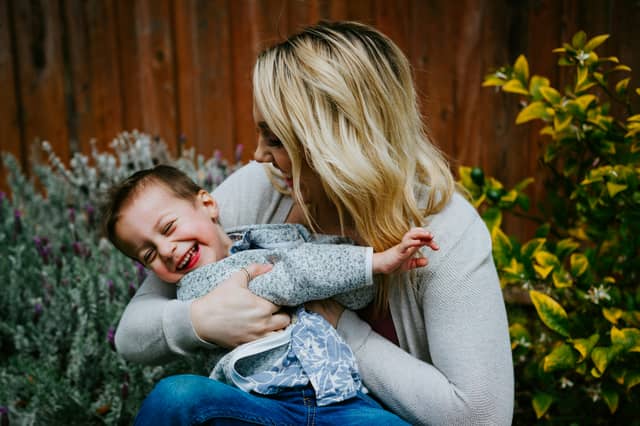

This week, the Everyday Mystic considers how we can bring up healthy children, regardless of the upbringing we encountered ourselves
When a small child falls and hurts themselves, they immediately run to a parent for comfort and reassurance. They don't have any qualms about doing so. They don't feel vulnerable or weak or incapable. All that is something they'll learn later as they are encouraged to be more resilient and independent. Something that is viewed as normal and desirable from a small child is later regarded as a weakness.
We want our children to grow up to be self reliant and independent, and that's as it should be. The problem occurs when we lose balance between being independent and not being able to ask for help.
The most independent children are those who know that their independence is built with a caveat: that there is always someone they can depend on. It’s this knowledge that stops that independence becoming hard-nosed, but also brittle.
Cast iron is rigid. It’s good for some applications but it doesn’t hold up well under pressure. Steel, on the other hand, is iron with a small amount of carbon added that allows it to flex. Our kids can’t be brought up to be iron, we need to make them flexible enough to bend but not break. They have to know they can depend on us until they are not only forged but also tempered. As adults they won’t need the reassurance that we’re there, but until then we have to be the dependable constant in their lives.
That means we have to learn to be constant and dependable ourselves, even if our parents weren’t. It can’t be the kind of dependable either, that says they can depend on us not to show up, not to make an effort or not to be there for them. We stop learned patterns from being passed on by making sure we don’t perpetuate them ourselves. That’s how generational progress is made.
If you think learning to depend on yourself was okay for you and that you turned out okay, and the same will be true for your children, then it probably wasn’t all right for you and you didn’t turn out okay. That kind of thinking closes the door to improving their experience of growing up. It increases the chances of them learning the same patterns of behaviour that you have. We’re supposed to want their lives to be free of our hang ups.
Jung said that one of the greatest obstacles to the development of a child was the unlived life of the parent. That can be taken two ways. It can mean that a parent may try to live experiences vicariously through their children’s endeavours. It can also mean that the parent may curtail the child’s life experiences through inflicting their life’s limitations on their offspring.
There’s a paradox to be found here. Since the 60’s parenting literature has encouraged parents to foster independence. We are told not to do things for our kids that they can do for themselves. This runs contrary to their development. We have to show up for them and be generous with our help. In doing so, they will want to emulate us. The toddler will want to walk rather than being picked up, want to eat for themselves rather than being fed. They learn the want for independence through dependence and example.
By demonstrating that we’re always there for them, we give them licence to try for themselves. They know that if they get it wrong, they can rely on us. We are the training wheels on the bicycle of life, there until the day comes when they ask us to remove them. Of course, as a parent, if they don’t ask we have to know when to encourage them to try.
A child resists authority far more when they don’t feel attachment. Simply ordering and expecting them to comply results in greater and greater resistance. Only in allowing them to be dependent and meeting those needs can they strengthen that bond. Later on, they’ll want to comply because their natural aversion to deference is diluted by that very bond.
We lose them in their teens, or so it seems. They won’t listen or take our advice and see us as idiots for the most part. That’s just the natural preparation for leaving the nest. They have to reject us to learn to fly for themselves. The paradox appears again in that they treat us badly because they know they can depend on us to take the flak. If we don’t push them away but hold that space open, they’ll wander back and raid the fridge in their late teens or early twenties.
We’re their guides in life. We’re not their engineers or programmers. It’s our job to allow them to develop into themselves. It’s not our job to create imitations of ourselves or to force them to adhere to our values. We have to show up and prove that our values work and allow them to reach independence. If we do it well they will learn from us how to be independent and strong and how to depend on others in tandem. That encourages interconnectedness, the idea that no one is an island. It will give them the strength to ask for help when they need to and you’ll have successfully completed one of the most difficult missions of raising a functioning adult. You’ll have taught them when and where to be independent and dependent without seeing one as forced strength or the other as fatal weakness.